Potential Modine deal would build on Samsung’s FlaktGroup acquisition and Helix investment as it expands its AI data center business
Samsung’s AI ambitions are expanding from the memory chips inside servers to the buildings, power systems and cooling equipment that keep them running.
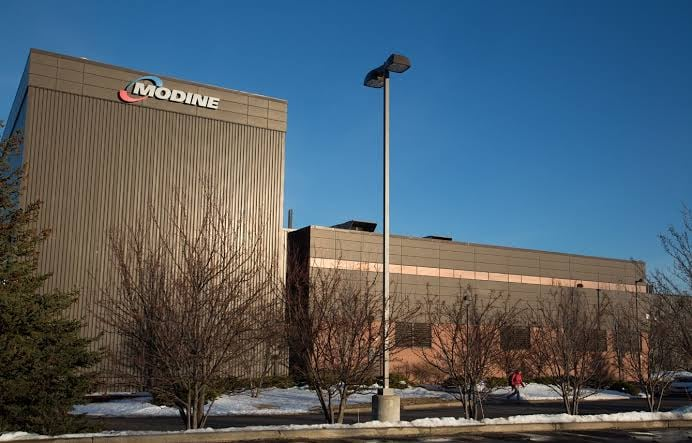
The South Korean conglomerate appears to be drawing on its construction, technology and insurance affiliates to take on more work in building and operating AI data centers. Last week’s report that Samsung Electronics was in talks to buy US cooling equipment maker Modine Manufacturing suggests the group could add another piece to that effort.
Bloomberg reported the talks on Nov. 12, citing people familiar with the matter. Samsung declined to comment. Modine had a market value of about $5.6 billion before the report, and its shares jumped about 29 percent in after-hours trading.
The Wisconsin-based company makes heating and cooling equipment for commercial and industrial customers. Its data center sales rose 95 percent on-year to $439.7 million in the quarter ended Sept. 30, driven largely by large data center customers in North America.
Modine spun off its automotive-focused Performance Technologies business in October and combined it with Gentherm, which acquired the Modine brand. On Nov. 13, shareholders approved a proposal to rename the remaining company Modexus Solutions. Modine is scheduled to present its long-term revenue and earnings targets at an investor day in Chicago on Wednesday.
A deal would build on Samsung Electronics’ purchase last year of Germany-based FlaktGroup for 1.5 billion euros ($1.7 billion). FlaktGroup makes air and liquid cooling systems for data centers. Adding Modine would expand Samsung’s cooling business and give it a bigger foothold among North American hyperscalers.
“Samsung appears to be looking to expand into the broader AI infrastructure business beyond supplying data center components such as high-bandwidth memory and heating, ventilation and air conditioning equipment,” an industry official said.
In September, Samsung Electronics and five affiliates — Samsung C&T, Samsung SDS, Samsung SDI, Samsung Life Insurance and Samsung Fire & Marine Insurance — announced a combined $1 billion investment in Helix Digital Infrastructure. The company, established by KKR, develops and operates the facilities that support large-scale AI computing.
Helix, launched in June and led by former Amazon Web Services CEO Adam Selipsky, aims to develop and operate hyperscale data centers along with the power generation, transmission and distribution infrastructure, and fiber-optic connections they need. For major cloud providers, that approach could simplify securing a site, finding enough electricity and connecting a new facility to the network.
The moves suggest Samsung may be positioning itself to supply AI data centers from the ground up by drawing on each of its affiliates' strengths. Samsung C&T brings data center construction expertise and Samsung SDI makes energy storage systems.
“Moving forward, Samsung is poised to expand its role from a traditional hardware component supplier to an active architect of the global AI infrastructure ecosystem,” the company said when it announced the Helix investment.
Samsung SDS, which built its business running IT systems for group companies, now designs, builds and operates data centers for outside customers and aims to expand its AI infrastructure capacity to more than 800 megawatts by 2031. The two insurers add financing capacity.
Analysts note that while Samsung has a broad range of capabilities across its affiliates, it has yet to show it can combine them into a single offering for data center customers.
herim@heraldcorp.com